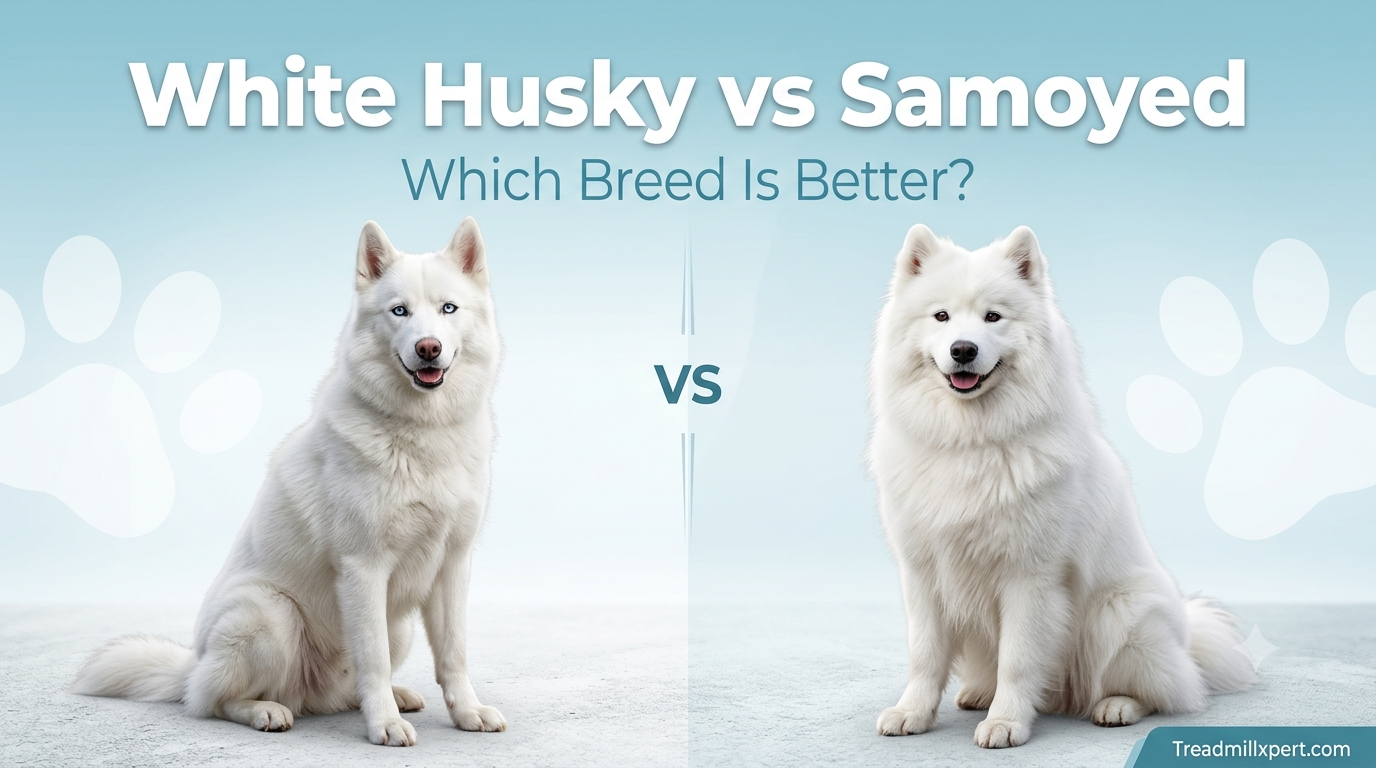
White Husky vs Samoyed – Which Dog Is Better? Complete 2026 Guide
In this guide we will compare White Husky vs Samoyed on everything that actually matters in 2026: looks, personality, exercise needs, grooming, training, health, cost, and which home they fit best. By the end you will know which one is better for you, not just which one is cuter on Instagram.
Quick Overview
White Siberian Husky is a color variation of the Siberian Husky. It is not a separate breed. Huskies were bred by the Chukchi people to pull sleds long distances in Siberia. They are independent, high energy, and built for endurance.
Samoyed is its own ancient breed from Russia and Siberia. Samoyeds were bred by the Samoyedic people to herd reindeer, pull sleds, and sleep in tents to keep families warm. They are called “smiling dogs” because of their upturned mouth.
Both are Spitz-type dogs, both have thick double coats, and both thrive in active homes. But their jobs in history shaped very different personalities.
1. Appearance: White Husky vs Samoyed
At first glance they look similar, but there are key differences.
White Husky:
- Size: 20 to 24 inches tall, 35 to 60 pounds
- Build: Athletic and lean, built for running
- Eyes: Almond shaped. Can be brown, blue, or one of each
- Ears: Erect, triangular, closer together
- Tail: Sickle-shaped tail that curves over the back, often with a brush
- Coat: Medium length double coat, white only
Samoyed:
- Size: 19 to 23 inches tall, 45 to 65 pounds
- Build: Stocky, strong, and a bit more “teddy bear” shaped
- Eyes: Dark brown and almond shaped, always friendly
- Ears: Smaller, thick, rounded at the tips, set far apart
- Tail: Big fluffy tail that curls over the back and lies flat
- Coat: Very thick, profuse double coat. Pure white with a silvery sheen
Winner for looks: Tie. Huskies look wild and wolf-like. Samoyeds look like plush toys. It depends on your taste.
2. Temperament And Personality
This is where they separate the most.
White Husky Personality
Huskies are independent thinkers. They were bred to make decisions on the trail without a human telling them what to do every 5 minutes. That means they can be stubborn. They are friendly, rarely aggressive, and love people. But they are not velcro dogs. They like being near you, but they also like freedom.
Huskies have a strong prey drive. Squirrels, cats, and small dogs can look like a game to them. They are also escape artists. If there is a hole, they will find it.
Samoyed Personality
Samoyeds are people dogs. They were bred to live inside tents with families, so they bond very deeply. They are called “velcro dogs” for a reason. If you are in the kitchen, they are in the kitchen. They are gentle, patient, and great with kids.
Samoyeds are also more vocal than most breeds. They do not just bark. They “talk”, howl, and sing. They also smile, which makes them look happy even when they are begging for food.
Winner for family cuddles: Samoyed. Winner for independence: White Husky.
3. Exercise And Energy Level
Both breeds are high energy, but they use that energy differently.
White Husky: Needs 2 hours of exercise minimum. Running, hiking, bikejoring, or long walks. If you do not give them a job, they will make one, like digging your garden or running away. Mental stimulation is critical. Puzzle toys and training games help.
Samoyed: Needs 1.5 to 2 hours of exercise. Walks, play, fetch, and dog sports like agility work great. They are less intense runners than Huskies but more playful. They get bored if left alone and will chew or bark.
Neither dog is good for a couch-only lifestyle. If you work 10 hours and never walk them, both will develop behavior problems.
Winner for endurance athlete: White Husky. Winner for playful family exercise: Samoyed.
4. Training And Intelligence
Both are smart, but smart does not always mean easy to train.
White Husky: Extremely intelligent and problem solvers. But they ask “what is in it for me?” before listening. Training must be fun, consistent, and reward-based. Recall is the hardest part. Many Husky owners never trust them off-leash.
Samoyed: Also intelligent but more eager to please. They respond better to positive training and love making you happy. Still, they have a stubborn streak and get bored with repetition. Short, fun sessions work best.
Winner for trainability: Samoyed, but only by a little. Both need an experienced or patient owner.
5. Grooming: The Fluff Factor
Fair warning: both breeds shed. A lot.
White Husky: Blows coat twice a year. For 3 weeks your house will look like it snowed. Weekly brushing is fine most of the year, daily during shedding season. They are relatively clean dogs and do not smell much.
Samoyed: The king of shedding. Their coat is thicker and denser than a Husky. They also blow coat heavily twice a year. You need to brush 3 to 4 times per week minimum to prevent mats. Many owners take them to a groomer every 6 to 8 weeks.
Both need nail trims, ear checks, and dental care.
Winner for easier grooming: White Husky.
6. Health And Lifespan
White Husky Lifespan: 12 to 15 years
Common issues: Hip dysplasia, eye problems like cataracts and progressive retinal atrophy, zinc deficiency.
Samoyed Lifespan: 12 to 14 years
Common issues: Hip dysplasia, diabetes, heart issues, progressive retinal atrophy, skin allergies.
Both breeds are generally healthy if you buy from a breeder who does health testing. Ask for OFA hip scores and eye clearances. Pet insurance is a good idea for both in 2026 due to vet costs.
Winner: Tie. Similar health profiles.
7. Living Situation: Apartment, House, Climate
Climate: Both were bred for cold. They hate heat. In hot countries like UAE, Pakistan, or India, you must have strong AC, walk them early morning or late night, and never leave them in a car.
Space: Neither is ideal for a small apartment unless you exercise them a ton. A house with a secure yard is better. The yard must have a 6-foot fence because both can jump and dig.
Alone Time: Samoyeds suffer more from separation anxiety. Huskies are more okay alone but will destroy things if bored.
Winner for apartments: Neither, but Samoyed adapts slightly better if exercised.
8. Cost In 2026
Purchase Price:
White Husky puppy from good breeder: $800 to $1500
Samoyed puppy from good breeder: $1500 to $3000. Samoyeds are rarer and more expensive.
Monthly Costs:
Food: $60 to $100 for high quality kibble
Grooming: $50 to $120 every 2 months
Vet and insurance: $40 to $80 per month
Toys and treats: $20 to $40
First year total can easily hit $3000 to $5000 for either breed.
Winner for budget: White Husky.
9. White Husky vs Samoyed: Pros And Cons
White Husky Pros:
- Stunning wolf-like looks
- Endless energy for active owners
- Cleaner coat, less matting
- More independent
- Lower purchase price
White Husky Cons:
- Escape artist and high prey drive
- Stubborn and challenging to train
- Needs huge amounts of exercise
- Bad recall
Samoyed Pros:
- Incredibly friendly and gentle with families
- Eager to please and easier to train
- Great with kids
- That famous Samoyed smile
Samoyed Cons:
- Extreme grooming needs
- Prone to separation anxiety
- Very vocal
- More expensive to buy
10. So, Which Dog Is Better?
The answer depends on you, not the dog.
Choose a White Siberian Husky if:
You are very active and love running, hiking, or dog sports. You want an independent dog that does not need to be on you 24/7. You can handle training challenges and have a super secure yard. You prefer a lower-maintenance coat.
Choose a Samoyed if:
You want a family companion who lives to be with you. You have time for heavy grooming. You like a playful, talkative, people-focused dog. You do not mind spending more upfront and dealing with shedding daily.
Both dogs will give you love, fur on your clothes, and a reason to laugh every day. The “better” dog is the one whose needs match your lifestyle.
Final Tips Before You Decide
- Meet both breeds in person before choosing. Temperament varies by individual.
- Adopt if you can. Rescues in 2026 have many Huskies and some Samoyeds needing homes.
- Find a breeder who health tests. Avoid puppy mills.
- Budget for training classes. Both breeds benefit hugely from them.
- Prepare for the heat. If you live in a warm country, invest in cooling mats and indoor play.